
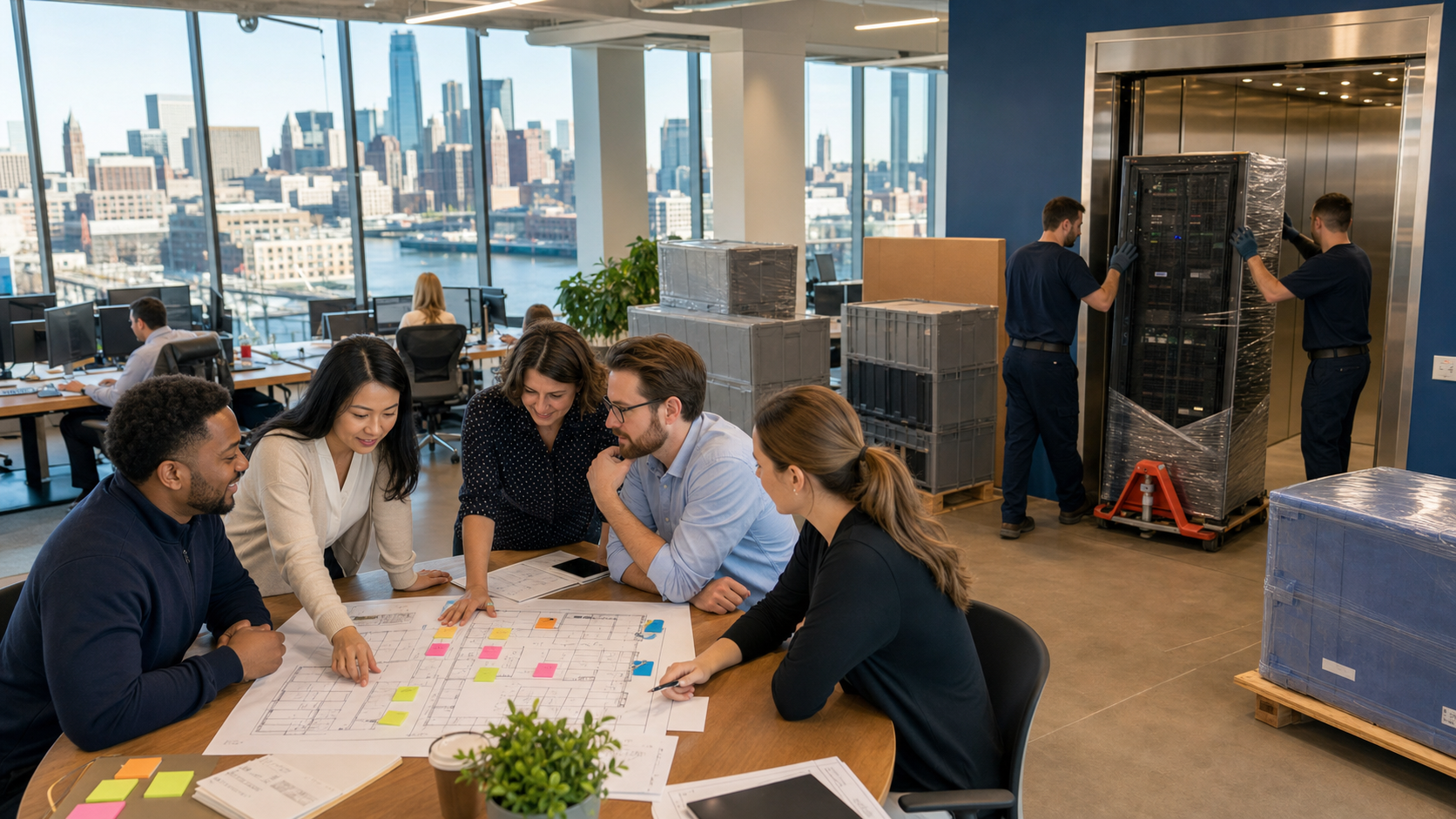
Turning a complex move into a strategic advantage
A full headquarters move in Milwaukee is one of the most consequential decisions a leadership team can make. You need occupancy permits on time, swing space that truly supports your people, and a plan that keeps teams productive while walls are going up and boxes are moving. When that plan is unclear, downtime grows and trust slips.
Handled well, though, relocation is more than a change of address. It is an opportunity to rethink how people work, how teams connect, and how your space reflects your culture and brand. For many organizations, facility relocation and design in Milwaukee becomes a powerful lever for retention, recruiting, and long-term growth.
For more than a century, our team at Coakley Brothers and our Brothers Interiors division has helped organizations navigate that kind of change. We bring together logistics, construction coordination, and workplace design so the move feels organized, not chaotic. As experienced partners, we work alongside your leadership to turn a complex relocation into a strategic workplace transformation.
The most reliable path is a phased approach, where design, permitting, and move management lock together to protect revenue and create an inspiring new place to work, a workplace that feels intuitive on day one and continues to support collaboration, focus, and culture over the long term.
Setting the vision and scope before the first box moves
A smart phased plan starts long before move day. The first step is getting clear on why you are moving and what success really means for your people and your business.
Helpful questions for leadership include:
- Are we moving to support growth, hybrid work, or consolidation?
- What level of downtime is acceptable for different teams?
- How should clients experience us during the move?
- What must feel better for employees on day one in the new space?
From there, you map your current and future space needs. That means looking at:
- Headcount now and projected growth
- Hybrid work patterns, including which roles are on-site most
- Collaboration zones and focus areas
- Wellness spaces, quiet rooms, and support areas
This is where design and planning come together. When we work on facility relocation and design in Milwaukee, we help clients translate strategy into square footage, adjacencies, and room types, and then into experiences. We focus on how spaces will feel and function: where teams will naturally gather, where individuals can concentrate, and how clients will move through the environment.
You also want a cross-functional leadership team, not just one person trying to carry everything. At a minimum, include:
- A C-suite sponsor
- Facilities or real estate leadership
- HR and internal communications
- IT and AV
- A relocation and design partner with deep local knowledge and multi-site experience
Starting planning in May or early summer is especially helpful for organizations targeting end-of-year or spring moves. That window allows time for multiple design rounds, furniture decisions and lead times, and the permitting cycles that come with local construction and inspections. It also gives room to engage employees in the vision, so the new workplace feels like an evolution of your culture rather than a sudden change.
Designing a phased move that keeps business running
A phased relocation plan means you move in waves, not all at once. Departments or functions shift in a planned order so operations never fully stop. Construction, inspections, and occupancy weave together so some areas are live while others are still being built or finished.
A simple example might look like:
- First wave: support teams and back-office groups that can handle short, planned disruptions
- Second wave: customer-facing or revenue-critical groups once IT, AV, and life safety systems have been tested
- Final wave: leadership hubs, major collaboration spaces, and reception areas when design details and finishes are complete
The layout of the new building plays a major role here. In Milwaukee, building form, neighborhood context, parking access, and elevator capacity all shape the sequence. If a floor is fully ready, that might become the first landing spot, even if other floors are not finished yet. Thoughtful adjacencies and circulation paths help people move in while contractors finish other zones safely.
To keep this from becoming fragmented, you need one integrated schedule. That master timeline should align:
- Design milestones and approvals
- Construction phases and inspections
- Furniture delivery and installation
- Move dates and crate schedules
- Internal communication touchpoints
Working from a single playbook allows us and our clients to anticipate impacts, make informed tradeoffs, and protect both business continuity and employee experience at every step.
Making smart use of swing space and occupancy permits
Swing space is temporary space that keeps teams working while their permanent area is under construction or renovation. It functions as a relief valve for your move, preserving productivity and continuity.
Common swing space options in Milwaukee include:
- Underused floors or wings in your current building
- Short-term leased suites in downtown towers or nearby business parks
- On-site zones you create by re-stacking teams
Effective swing space should not feel like a storage area. With the right planning, it can keep culture and productivity strong. That means:
- Ergonomic and reliable furniture
- Clear brand cues so people still feel “at home”
- Places where people can focus
- Areas where teams can collaborate easily
Occupancy permits can feel complex, but they do not have to slow you down. Each phase of your move usually requires signoff from local inspectors to confirm life safety, fire protection, and code compliance. As a seasoned local partner, we help you:
- Plan inspection dates into the schedule
- Confirm life safety systems are tested early
- Sequence areas so each phase can open legally and safely on time
Local experience matters here. Milwaukee has its own permitting processes, historic building requirements, and weather considerations. Heavy move activity in the middle of a harsh winter storm is rarely a good idea, so planning around seasonal patterns keeps people and assets safer and reduces project risk.
Preserving heritage while modernizing the workplace
Many organizations in our city relocate into historic or legacy buildings. Former factories become headquarters, long-held offices are refreshed instead of abandoned, and landmark buildings are renewed for modern use. Those spaces carry memories and community meaning.
A thoughtful plan respects that history. You might:
- Preserve original brick, beams, or windows where possible
- Display archival photos, drawings, or product samples
- Use environmental graphics to tell the story of the company and the building
At the same time, you still need modern systems and amenities. That can include current technology, flexible furniture, acoustic solutions, and wellness features for employees. The goal is to bring in what is new without erasing what people value.
Our team has supported many facility relocation and design projects in Milwaukee where the brief is exactly that balance: honor the past, support today’s ways of working, and create a platform for what comes next. Drawing on our long-standing roots in the region, we help organizations preserve the character of their buildings while delivering a workplace that feels contemporary, healthy, and high-performing.
Safeguarding business continuity, culture, and long-term assets
Behind every effective phased plan is a set of safeguards for operations. That usually includes:
- Redundant IT plans and failover paths
- Staged equipment moves instead of “big bang” cutovers
- Confirmed data backups before any server or storage moves
- After-hours changes for customer-facing systems
People and culture need just as much care as servers and switches. Clear, steady communication lowers stress and reinforces trust. Helpful tools include:
- Town halls or Q&A sessions about the move
- Regular emails and floor plans so people know where they are going
- Leadership presence in both old and new spaces
Hybrid work can also be part of the continuity plan. Remote options on key move days, staggered schedules, and clear expectations keep workloads moving without overwhelming the building.
Once everyone is in the new space, design decisions either support or obstruct daily work. Strong wayfinding, team “neighborhoods,” and a mix of open and enclosed rooms help people settle in quickly. Shared spaces, from project rooms to social hubs, bring teams back together after the disruption of the move and reinforce the culture you want to sustain.
A relocation is not the end of the story. With ongoing workplace asset management, you can track furniture, fixtures, equipment, and technology across all your locations. Data about how spaces are used helps you reconfigure with less disruption later and supports regional and national portfolios from a solid Milwaukee base.
As a partner, we support clients across the full project lifecycle: from early strategy and test fits, through procurement and move execution, to long-term asset management and future reconfigurations. That combination of local heritage and national reach helps organizations create workplaces that evolve as their needs change.
Handled with care, a phased relocation plan does more than minimize downtime. It protects business continuity, respects heritage, and gives your teams a workplace that feels grounded in Milwaukee’s history and ready for the future, a space where people can do their best work, every day.
Get Started With Your Project Today
If you are planning a major workplace change, our team at Coakley Brothers is ready to guide you through every step of facility relocation and design in Milwaukee. We combine strategy, design, and logistics to create spaces that support your people and your long-term goals. Tell us about your upcoming move or redesign and we will build a tailored plan that fits your timeline and budget. To begin the conversation and request a customized quote, simply contact us.